Operating Principle
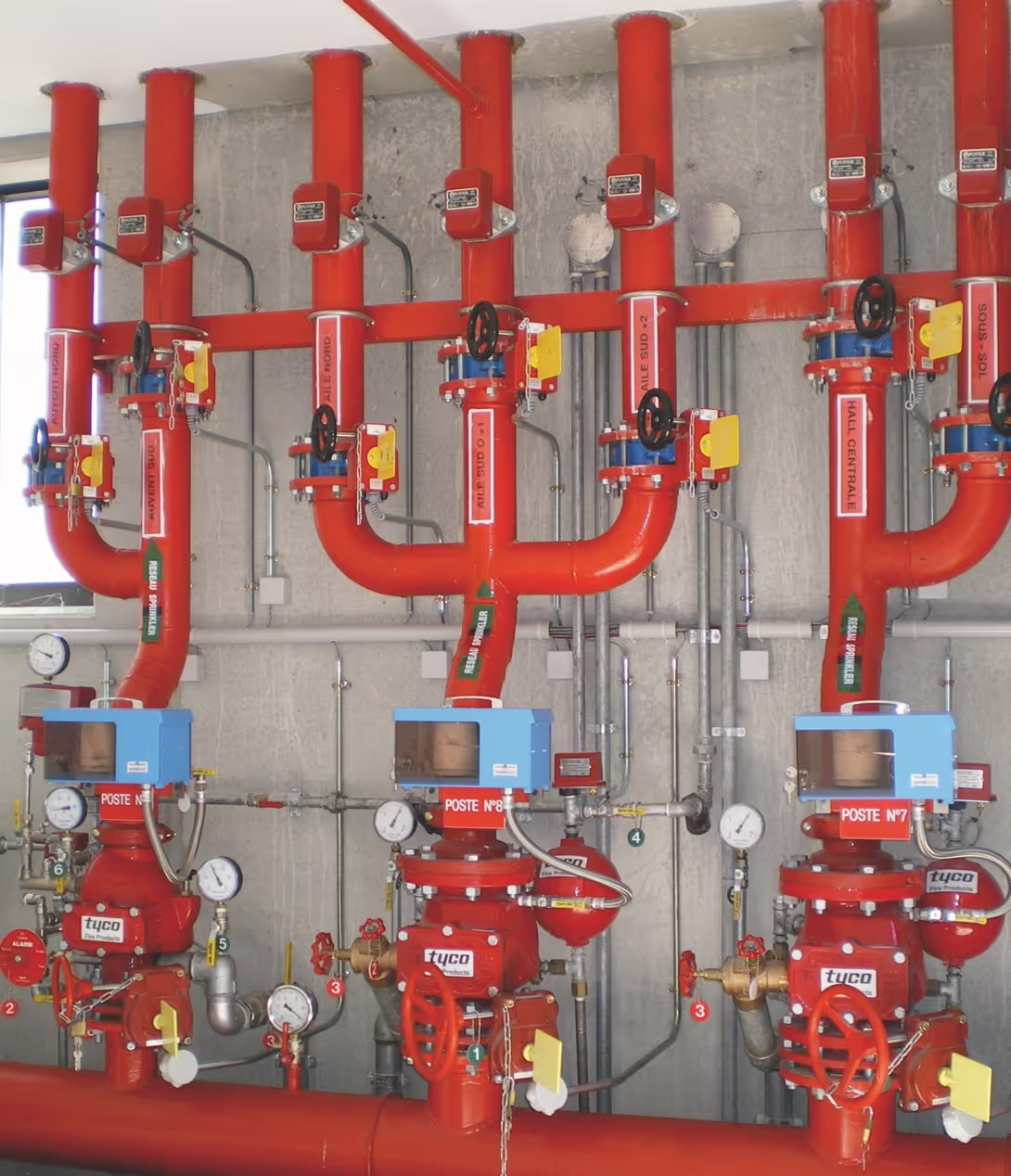
The system is a hydraulic assembly consisting of one or more water sources, one or more control valve stations, and a network of pipes, mostly steel, maintained under permanent water (or air) pressure.
A control valve station is designed to:
- to sound the alarm and identify the fire's origin zone,
- to allow systematic monitoring of the system's proper functioning,
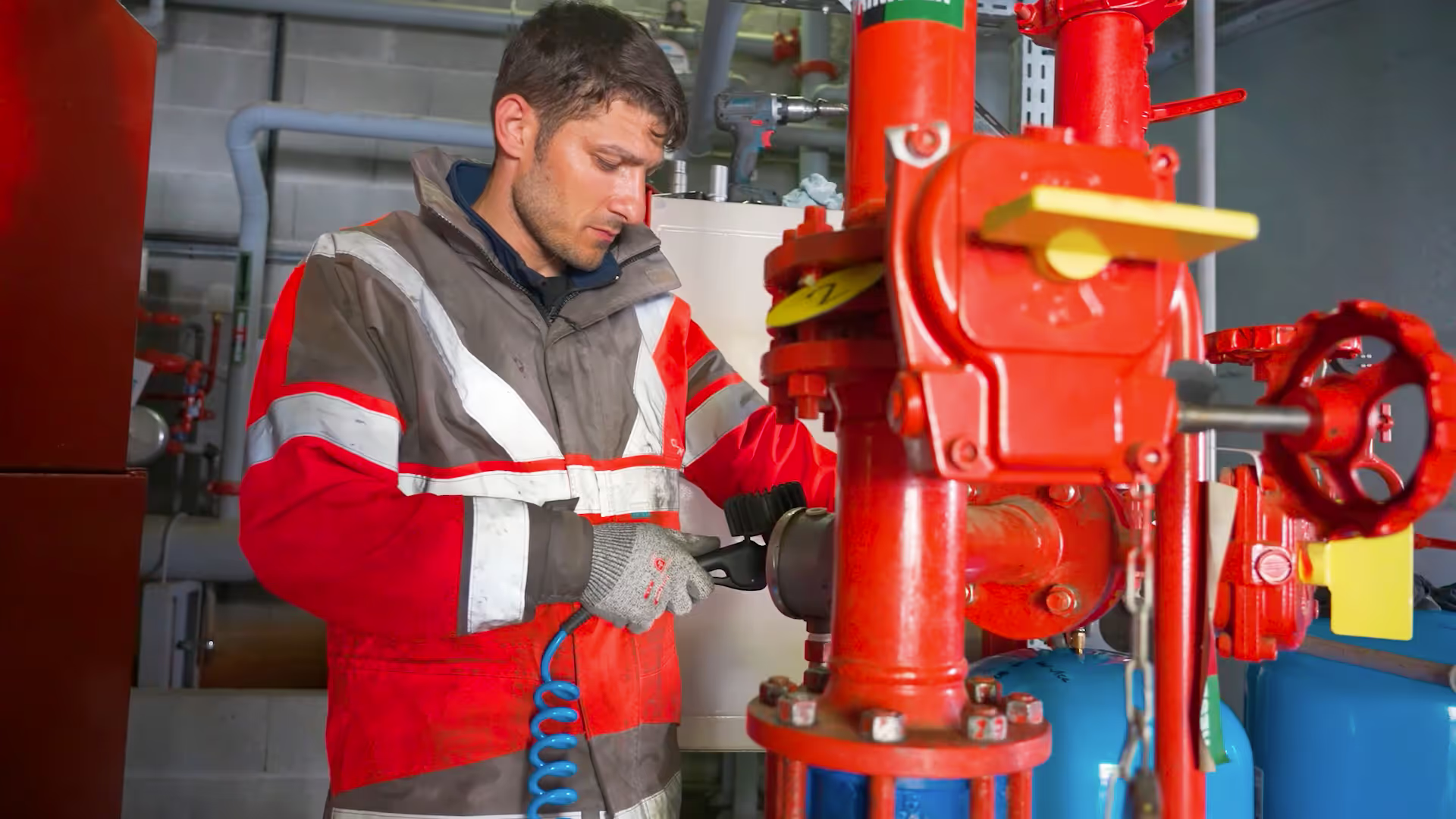
- to perform some of the periodic tests required for system maintenance or verification,
- to enable the system to be shut down in case of force majeure.
The pipes are equipped with sprinkler heads, installed according to precise rules for spacing and distance from the roof of the protected buildings, and arranged to open, as quickly as possible, under the action of heat. The system's principle is to discharge a quantity of water adapted to the risk over a predetermined area.
A sprinkler head opens due to a rise in temperature. The heat generated by the fire rises to the ceiling. At a certain temperature, the bulb (or fusible link) that keeps the sprinkler head closed bursts and releases water directly over the fire.
Localized, the water discharge is also progressive. If cooling is insufficient, neighboring sprinklers also open and help control the fire. The pressure drop caused by the opening of the first sprinkler triggers the pumps to start in sequence.
Water flowing through the control valve station activates a hydraulic gong and an electrical alarm contact, which signal the alarm. The water discharge is maintained to contain the fire until emergency services intervene and the valves are manually closed.